Choosing between open source and closed source software is a challenge that many business owners face. Each option offers its own advantages and drawbacks, which makes the decision less obvious. As the eCommerce market grows, making the right choice becomes increasingly important for SaaS platforms that want to stay competitive and scale effectively.
According to Statista, global eCommerce sales are projected to exceed $6.3 trillion by 2026. As a result, both order volumes and operational complexity will grow significantly, making software integrations even more crucial.
Moreover, research by the National Retail Federation shows that adopting an order management system can reduce operational costs by up to 15% and improve customer satisfaction by 16% . Thus, understanding the differences between open and closed source software is essential for making the right investment in your business's future.
#1 What is the Price Policy?
Open source software is often referred to as free, but there may still be costs for extra services like assistance, additional functionality, or added features. You may pay for these services, even with OSS.
Closed source software typically requires a payment. The costs vary based on software complexity. Although it might cost more, closed source software provides a higher-quality product, full support, and continuous innovation. Most companies also offer free trials, allowing users to test if the software meets their needs.
#2 How Secure are Open Source and Closed Source Software?
Security is a critical consideration when choosing between open source and closed source software. With open source software, the community can view, share, and modify the code. This transparency allows quick fixes, upgrades, and thorough testing of code after each release. However, the open availability of the code also presents opportunities for hackers to exploit it.
On the other hand, closed source software can only be fixed by the vendor. When issues arise, users must request support and wait for a response, which can take longer compared to open source software.
When choosing the most secure software, it's essential to understand that both open and closed source have their strengths and weaknesses. This often presents a challenge for businesses in specific industries.
#3 What About Source Code Availability?
Closed source software typically offers more robust support. With a paid plan, you can contact support and receive assistance within one business day in most cases. Support is well-organized and documented, ensuring a smoother experience for users.
Open source software, however, lacks this option. Support usually comes in the form of forums, community articles, or hiring an expert. This approach may not guarantee a quick or high-quality response, depending on the complexity of the issue.
#4 What About Source Code Availability?
Open source software allows users to modify the source code without restrictions. Users can innovate and benefit from contributions made by others within the community. This open model allows continuous improvement of the software, enhancing its capabilities.
In contrast, closed source software restricts access to the source code, meaning only the original developers can view or modify it. While this limitation may reduce the software's flexibility, it can contribute to greater security and stability.
#5 Which to Choose: Open Source vs Closed Source Software?
Choosing between open source and closed source software is a decision that can significantly impact your business operations, especially when it comes to flexibility, costs, security, and scalability. Each option has its own set of advantages and drawbacks, which makes the decision difficult for many organizations, particularly those looking to build or scale their eCommerce platforms.
Open Source Software Capabilities
For example, open source software refers to programs whose source code is publicly available for anyone to view, modify, and distribute. This openness fosters collaboration and innovation, as developers from around the world can contribute to improving the software. One of the significant advantages of open source software is its flexibility. Users can adapt the software to fit their specific needs, whether that involves modifying the code or adding new features. Additionally, open source software is usually free to use, though businesses may still need to pay for support, additional services, or premium features.
However, usability can be a challenge with open source software. Often, user guides are written with developers in mind, not end-users, which makes them less accessible. Additionally, documentation may not conform to standard structures, making it harder for non-technical users to navigate.
Closed Source Software Capabilities
In contrast, closed source software is proprietary, meaning the source code is hidden from the public. Only the developers or the company behind the software have access to the source code and control its development. Closed source software generally excels in usability. The documentation is typically well-organized, with clear and detailed instructions, making it easier for users to understand and get started quickly. Closed source software typically comes with a license fee and offers strong vendor support.
eCommerce software provider controls the updates, security patches, and overall direction of the software. While it doesn't offer the same flexibility as open source software, closed source solutions often come with more polished user interfaces, consistent updates, and higher-quality customer support.
Below is a comparison of key aspects between open source and closed source software:

Thus, open source and closed source software come with distinct benefits and challenges. Open source software provides greater flexibility and lower upfront costs, while closed source software typically offers better support, stability, and security. The right choice depends on your specific needs, resources, and business goals. By understanding these differences, you can make an informed decision that aligns with your business strategy.
Best Examples of Open and Closed Source Software Shopping Carts
The market includes many open and closed source software shopping carts. However, the key difference between them lies in pricing and ownership control. Open source shopping carts are usually free to download and modify. In contrast, closed source platforms require a paid subscription or license.
With closed source software, you typically receive official customer support, structured documentation, and regular vendor-driven updates. On the other hand, open source platforms rely on community support. Although you may not get dedicated assistance, active developer communities often provide quick solutions through forums and repositories.
According to industry comparisons published by Top10eCommerceSiteBuilders , open source solutions stand out due to flexibility and scalability. Developers can customize every layer of the system. Moreover, businesses can scale without facing additional fees tied to revenue growth.
Closed source software, meanwhile, focuses on usability and fast deployment. As a result, non-technical users can launch stores more quickly. In addition, built-in hosting, security patches, and managed infrastructure reduce technical overhead.
Among open source shopping carts, Magento (Adobe Commerce) and OpenCart remain popular choices. Conversely, Shopify and BigCommerce represent leading closed source SaaS platforms.
Example: Retrieving Store Data via API
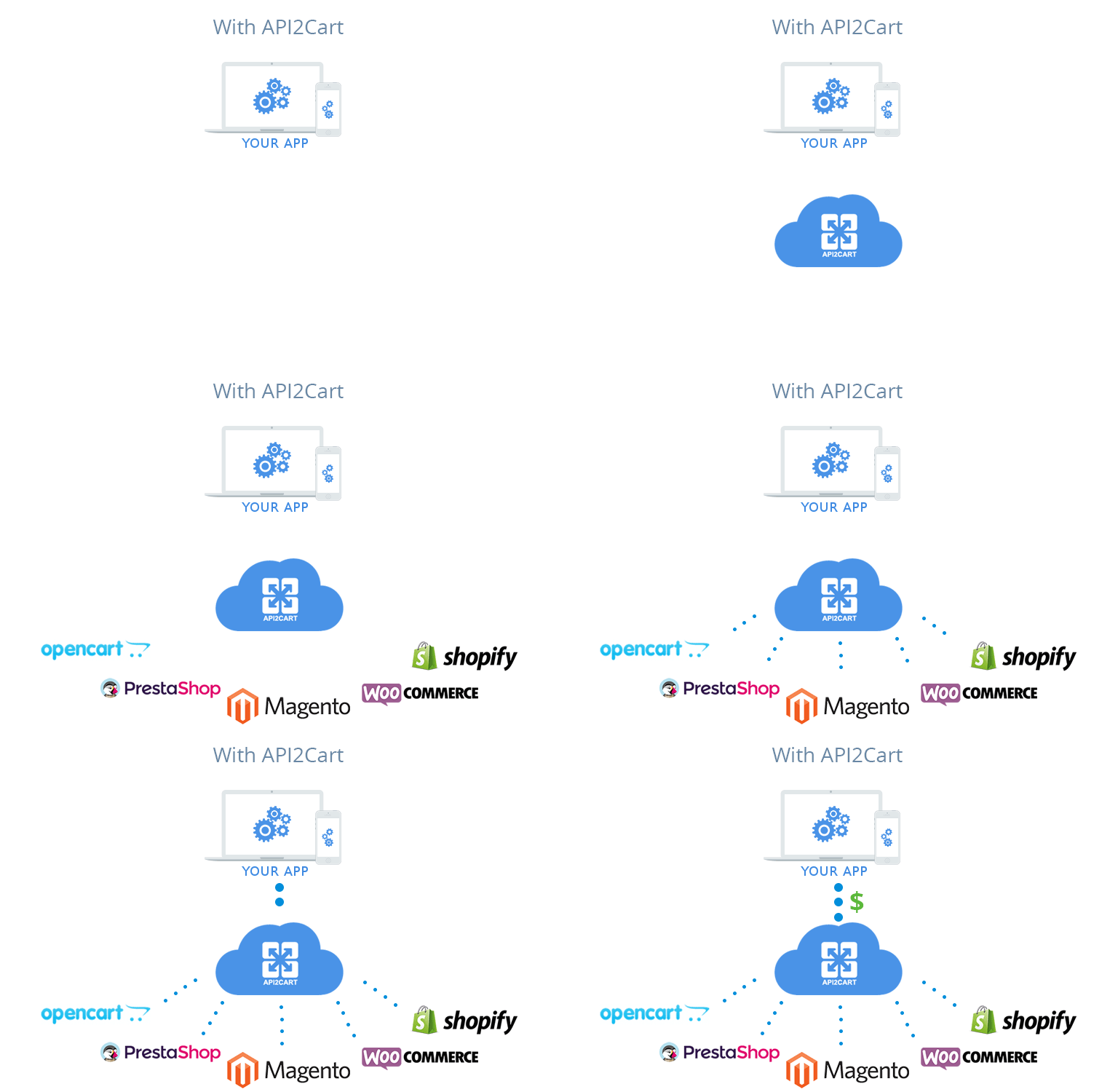
Regardless of whether a platform is open or closed source, developers often need structured access to store data. For example, using API2Cart's unified API, you can retrieve product or order data from 60+ platforms and marketplaces, including Shopify, Magento, WooCommerce, BigCommerce, Etsy, Wix, OpenCart, Temu, Shopee, TikTok Shop, Lazada, Flipkart, and others, at once - all through a single integration. You can explore the official API documentation here: API2Cart API Documentation.
Below is a simplified example of a JSON response returned when retrieving order.info method:
{
  'return_code': 0,
  'return_message': 'string',
  'result': {
    'id': 'string',
    'order_id': 'string',
    'basket_id': 'string',
    'channel_id': 'string',
    'customer': {
      'id': 'string',
      'email': 'string',
      'first_name': 'string',
      'last_name': 'string',
      'phone': 'string',
      'additional_fields': {},
      'custom_fields': {}
    },
    'create_at': {
      'value': 'string',
      'format': 'string',
      'additional_fields': {},
      'custom_fields': {}
    },
    'currency': {
      'id': 'string',
      'name': 'string',
      'iso3': 'string',
      'symbol_left': 'string',
      'symbol_right': 'string',
      'rate': 0,
      'avail': true,
      'default': true,
      'additional_fields': {},
      'custom_fields': {}
    },
    'shipping_address': {
      'id': 'string',
      'type': 'string',
      'first_name': 'string',
      'last_name': 'string',
      'postcode': 'string',
      'address1': 'string',
      'address2': 'string',
      'phone': 'string',
      'phone_mobile': 'string',
      'city': 'string',
      'country': {
        'code2': 'string',
        'code3': 'string',
        'name': 'string',
        'additional_fields': {},
        'custom_fields': {}
      },
      'state': {
        'code': 'string',
        'name': 'string',
        'additional_fields': {},
        'custom_fields': {}
      },
      'company': 'string',
      'fax': 'string',
      'website': 'string',
      'gender': 'string',
      'region': 'string',
      'default': true,
      'tax_id': 'string',
      'identification_number': 'string',
      'alias': 'string',
      'additional_fields': {},
      'custom_fields': {}
    },
    'billing_address': {
      'id': 'string',
      'type': 'string',
      'first_name': 'string',
      'last_name': 'string',
      'postcode': 'string',
      'address1': 'string',
      'address2': 'string',
      'phone': 'string',
      'phone_mobile': 'string',
      'city': 'string',
      'country': {
        'code2': 'string',
        'code3': 'string',
        'name': 'string',
        'additional_fields': {},
        'custom_fields': {}
      },
      'state': {
        'code': 'string',
        'name': 'string',
        'additional_fields': {},
        'custom_fields': {}
      },
      'company': 'string',
      'fax': 'string',
      'website': 'string',
      'gender': 'string',
      'region': 'string',
      'default': true,
      'tax_id': 'string',
      'identification_number': 'string',
      'alias': 'string',
      'additional_fields': {},
      'custom_fields': {}
    },
    'payment_method': {
      'name': 'string',
      'additional_fields': {},
      'custom_fields': {}
    },
    'shipping_method': {
      'name': 'string',
      'additional_fields': {},
      'custom_fields': {}
    },
    'shipping_methods': [
      {
        'name': 'string',
        'additional_fields': {},
        'custom_fields': {}
      }
    ],
    'status': {
      'id': 'string',
      'name': 'string',
      'history': [
        {
          'id': 'string',
          'name': 'string',
          'modified_time': {
            'value': 'string',
            'format': 'string',
            'additional_fields': {},
            'custom_fields': {}
          },
          'notify': true,
          'comment': 'string',
          'additional_fields': {},
          'custom_fields': {}
        }
      ],
      'refund_info': {
        'shipping': 0,
        'fee': 0,
        'tax': 0,
        'total_refunded': 0,
        'time': {
          'value': 'string',
          'format': 'string',
          'additional_fields': {},
          'custom_fields': {}
        },
        'comment': 'string',
        'refunded_items': [
          {
            'product_id': 'string',
            'variant_id': 'string',
            'order_product_id': 'string',
            'qty': 0,
            'refund': 0,
            'additional_fields': {},
            'custom_fields': {}
          }
        ],
        'additional_fields': {},
        'custom_fields': {}
      },
      'additional_fields': {},
      'custom_fields': {}
    },
    'totals': {
      'total': 0,
      'subtotal': 0,
      'shipping': 0,
      'tax': 0,
      'discount': 0,
      'additional_fields': {},
      'custom_fields': {}
    },
    'total': {
      'subtotal_ex_tax': 0,
      'wrapping_ex_tax': 0,
      'shipping_ex_tax': 0,
      'total_discount': 0,
      'total_tax': 0,
      'total': 0,
      'total_paid': 0,
      'additional_fields': {},
      'custom_fields': {}
    },
    'discounts': [
      {
        'code': 'string',
        'value': 0,
        'type': 'string',
        'additional_fields': {},
        'custom_fields': {}
      }
    ],
    'order_products': [
      {
        'product_id': 'string',
        'order_product_id': 'string',
        'model': 'string',
        'name': 'string',
        'price': 0,
        'price_inc_tax': 0,
        'quantity': 0,
        'discount_amount': 0,
        'total_price': 0,
        'tax_percent': 0,
        'tax_value': 0,
        'tax_value_after_discount': 0,
        'options': [
          {
            'option_id': 'string',
            'name': 'string',
            'value': 'string',
            'price': 0,
            'weight': 0,
            'type': 'string',
            'product_option_value_id': 'string',
            'additional_fields': {},
            'custom_fields': {}
          }
        ],
        'variant_id': 'string',
        'weight_unit': 'string',
        'weight': 0,
        'barcode': 'string',
        'parent_order_product_id': 'string',
        'additional_fields': {},
        'custom_fields': {}
      }
    ],
    'bundles': [
      {
        'product_id': 'string',
        'order_product_id': 'string',
        'model': 'string',
        'name': 'string',
        'price': 0,
        'price_inc_tax': 0,
        'quantity': 0,
        'discount_amount': 0,
        'total_price': 0,
        'tax_percent': 0,
        'tax_value': 0,
        'tax_value_after_discount': 0,
        'options': [
          {
            'option_id': 'string',
            'name': 'string',
            'value': 'string',
            'price': 0,
            'weight': 0,
            'type': 'string',
            'product_option_value_id': 'string',
            'additional_fields': {},
            'custom_fields': {}
          }
        ],
        'variant_id': 'string',
        'weight_unit': 'string',
        'weight': 0,
        'barcode': 'string',
        'parent_order_product_id': 'string',
        'additional_fields': {},
        'custom_fields': {}
      }
    ],
    'modified_at': {
      'value': 'string',
      'format': 'string',
      'additional_fields': {},
      'custom_fields': {}
    },
    'finished_time': {
      'value': 'string',
      'format': 'string',
      'additional_fields': {},
      'custom_fields': {}
    },
    'comment': 'string',
    'store_id': 'string',
    'warehouses_ids': [
      'string'
    ],
    'refunds': [
      {
This example demonstrates how developers can standardize data retrieval across both open and closed source shopping carts. Consequently, integration complexity decreases, while scalability improves.
Conclusion
Both open source and closed source software offer unique benefits and challenges. Ultimately, the best choice depends on your business needs, scalability goals, and available resources. We hope this article has clarified the differences and helped you make an informed decision.
If you're interested in integrating with eCommerce platforms, API2Cart provides the ideal solution. It offers a unified API that connects to 60+ eCommerce platforms and marketplaces, including Magento, Shopify, WooCommerce, BigCommerce, OpenCart, PrestaShop, and more.
Please fill in the form to download your document:
How to Integrate with Multiple eCommerce Platforms in Less than a Month
Discover how to establish a connection with multiple eCommerce platforms quickly.
Wait!
Before you go, download the guide on how to integrate with 60+ eCommerce platforms in less than a month!
Ready to streamline your eCommerce integrations? Sign up for API2Cart today and discover how a unified API can simplify your connections with 60+ eCommerce platforms. With API2Cart, you can manage and sync store data more efficiently. Integrate once, save 4-8 weeks, and avoid the costs of managing separate connections!
FAQs
What is the difference between open-source and closed-source software?
The main difference between open source and closed source software is access to the source code. Open source software allows users to view, modify, and distribute the source code, promoting collaboration and flexibility. In contrast, closed source software restricts access to the source code, offering a more controlled environment with vendor-driven updates and support. While open source provides more customization, closed source generally ensures better security, stability, and official support.
Which is more secure: open source or closed source software?
The security of open source and closed source software depends on various factors. Open source software benefits from transparency, allowing the community to review, identify, and fix vulnerabilities quickly. However, this openness can also make it a target for attackers. On the other hand, closed source software is more controlled, with security fixes handled by the vendor, which can lead to more structured and timely updates. Ultimately, both can be secure if properly maintained, but closed source software may offer more consistent security support.
What are examples of open source and closed source software?
Examples of open source software include platforms like Magento and OpenCart, which allow users to modify and customize the source code and have large developer communities contributing to their improvement. In contrast, examples of closed source software include Shopify, and BigCommerce, where the source code is proprietary and only the vendor can make changes or updates. These closed systems typically offer more structured support and guaranteed updates from software vendors.
How can you reduce the complexity of integrations with open and closed platforms?
API2Cart simplifies integrations with open and closed platforms by providing a unified API that allows eCommerce software to integrate with eCommerce platforms and marketplaces, such as open source (e.g., Magento, OpenCart) and closed source (e.g., Shopify, BigCommerce), and 60+ eCommerce platforms and marketplaces, including WooCommerce, Etsy, Wix, Temu, Shopee, Flipkart, TikTok Shop, Lazada, and others, at once - all through a single integration. Instead of creating and maintaining separate integrations for each platform, developers can use API2Cart to access, sync, and manage data, such as products, orders, and customers across multiple platforms through a single integration. This reduces complexity, saves time, and enhances scalability for eCommerce businesses.