Salesforce Commerce Cloud is highly popular in countries like the USA, UK, Germany, and France. For eCommerce SaaS vendors, connecting to Salesforce Commerce Cloud is a top priority to reach enterprise-level merchants. Using the Salesforce Commerce Cloud API, software developers can integrate their eCommerce software with this platform, access various types of store data, and provide valuable features for sellers. In this article, we will explore the peculiarities of the Salesforce Commerce Cloud platform API, the challenges of integration development, and how to simplify it using a unified API.

What is Salesforce Commerce Cloud API?
The Salesforce Commerce Cloud API is a crucial tool that allows software providers to integrate their solutions with Salesforce Commerce Cloud and gain access to data from stores built on the platform. It enables developers to access and manage key store entities such as products, orders, customers, inventory, and more. For eCommerce SaaS, integration with the Salesforce Commerce Cloud API means they can implement various important features for sellers.
These features include the ability to:
- Create and update product listings directly from your system.
- Import and manage orders by retrieving details, statuses, and fulfillment updates.
- Synchronize inventory levels in real time to prevent overselling.
- Access customer information (with proper permissions) for better fulfillment and support.
Key Benefits of Salesforce Commerce Cloud API Integration
For an integration developer, understanding the business impact of your work is key. Integrating with the Salesforce Commerce Cloud API unlocks significant growth opportunities for your SaaS company.
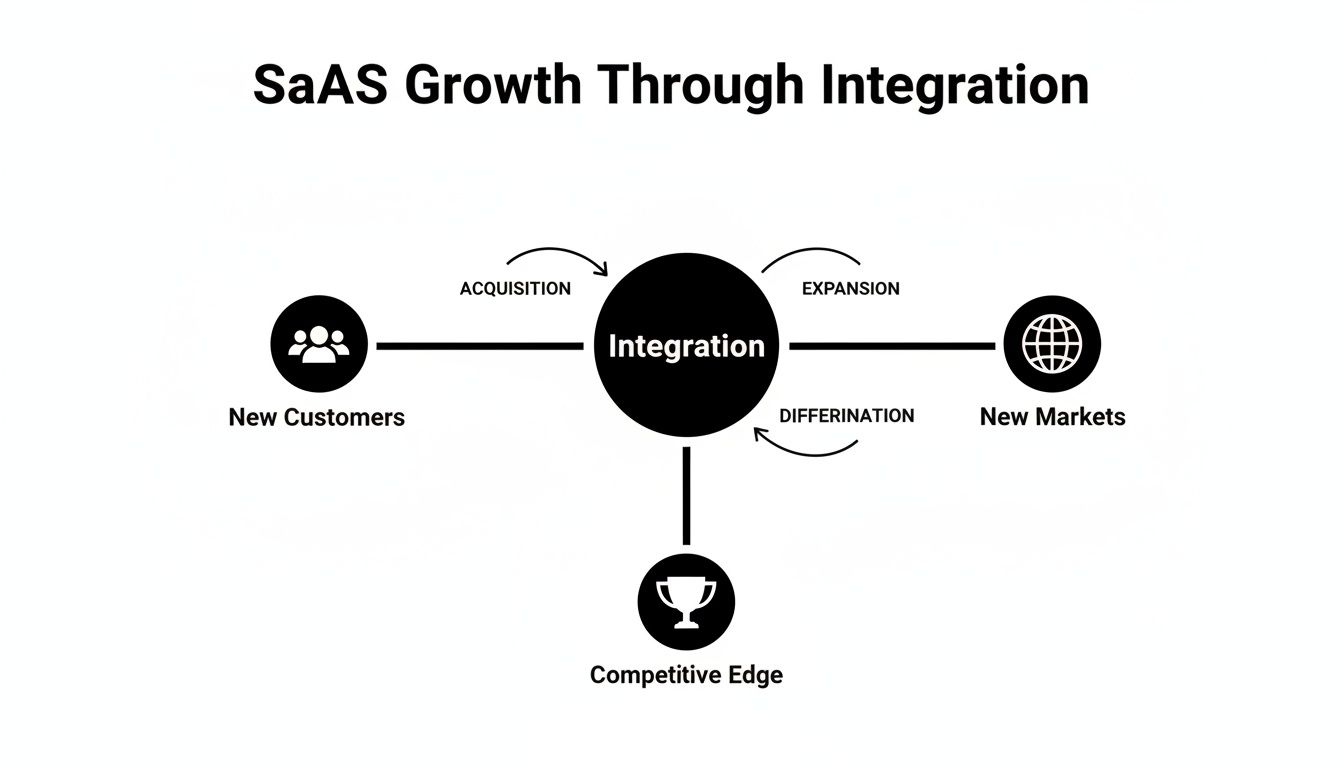
Access to a large and growing customer base
Integrating with Salesforce means your solution becomes available to thousands of established online merchants. This provides your sales and marketing teams with a pre-qualified pool of potential clients, supercharging customer acquisition and helping to scale your user base much faster.Enter new markets
Salesforce Commerce Cloud has a major global footprint, particularly in North America and Europe. An integration acts as your passport to these lucrative markets, allowing your company to expand its market share without the massive upfront investment that international growth typically requires.Increase revenue and profits
The logic is simple: new clients mean new revenue. The more platforms your SaaS supports, the larger your potential client base becomes, directly leading to increased revenue and profitability for the business.Competitive advantage
Each new supported platform puts you one step ahead of your competitors, making your software a more versatile and attractive choice for merchants.
While the benefits are clear, there are also significant challenges to consider before starting a direct integration project.
Challenges of Salesforce Commerce Cloud API Integration
Directly connecting to a platform API is a resource-intensive task filled with technical hurdles. Developers face several common challenges when building these integrations from scratch.
Time-consuming
Building a robust integration from the ground up is not a quick task. It can easily take several months of dedicated engineering effort to properly develop, test, and deploy the connection, which significantly delays your time-to-market.Expensive
The extended development timeline translates directly into high costs. When you factor in developer salaries, project management, and infrastructure, the cost of shopping cart API integration can reach thousands of dollars for each platform you connect with.Complicated
Every platform API has its own unique logical architecture and data structures. This means developers face a steep learning curve for each new platform, requiring deep dives into complex documentation and a lot of trial-and-error.APIs often change
Platforms frequently update their systems and release new API versions to add features or patch security vulnerabilities. These changes can break your existing integration without warning, forcing your team into a never-ending cycle of reactive maintenance.
Fortunately, there is a better way to simplify Salesforce Commerce Cloud integration and avoid these obstacles by using a ready-made integration solution like API2Cart.
How API2Cart Helps to Develop Salesforce Commerce Cloud API Integration
API2Cart is a unified API service designed specifically for eCommerce software vendors like order management systems, PIMs, and shipping solutions. Instead of building separate, complex integrations for each shopping platform, you can integrate with API2Cart's single API to connect with Salesforce Commerce Cloud and over 60 other platforms simultaneously. This approach dramatically simplifies and speeds up the development process, allowing you to bypass the common challenges of direct integration.
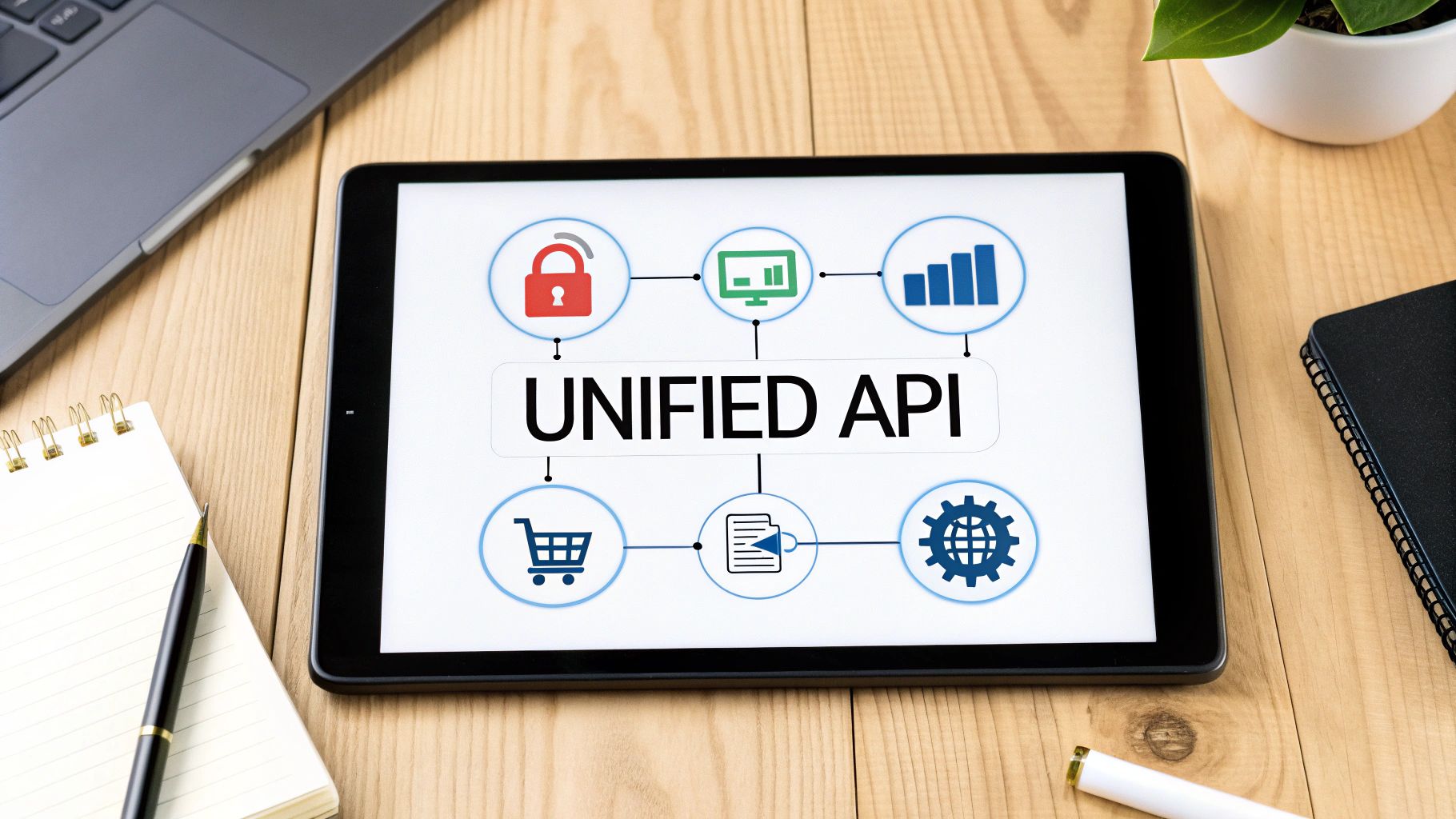
API2Cart provides more than 100 API methods to get, add, update, and sync essential store data, including orders, products, customers, categories, and shipments. It standardizes the data from different platforms, so your application works with a consistent data structure regardless of the underlying platform API. This allows you to focus on building core features for your software rather than getting bogged down in the complexities of individual platform APIs.
Here is an example of how the response structure of the product.list method looks like via API2Cart:
{
  "return_code": 0,
  "return_message": "",
  "result": {
    "products_count": 2,
    "product": [
      {
        "id": "1",
        "type": "simple",
        "name": "Sample T-Shirt",
        "sku": "TS-001",
        "price": 19.99,
        "description": "A high-quality cotton t-shirt.",
        "quantity": 150,
        "in_stock": true,
        "create_at": "2024-01-10 12:00:00"
      },
      {
        "id": "2",
        "type": "simple",
        "name": "Classic Hoodie",
        "sku": "HD-002",
        "price": 49.99,
        "description": "A warm and comfortable hoodie.",
        "quantity": 80,
        "in_stock": true,
        "create_at": "2024-01-11 14:30:00"
      }
    ]
  }
}
By leveraging a unified service, you can accelerate your integration roadmap, reduce development costs, and deliver more value to your customers faster. Using a unified platform API solution is the most efficient way to scale your eCommerce integrations.
Ready to bypass integration headaches and connect to dozens of platforms effortlessly? Sign up for free.