Editorial update (August 2026): Hardcoded platform counts, generic cost and timeline estimates, and absolute comparison claims were replaced with current, conditional guidance.
Shipping is an essential part of eCommerce, so many online sellers put a lot of effort into it. On the surface, it looks simple: pack the sold product in a box and ship it to the customer. In reality, shipping involves much more than picking, packaging, and transport — order fulfillment, shipment monitoring, stock control, updating order status, and other operations. That is why many online shop owners rely on shipping software and need reliable shopping cart shipping integration. Shopping cart integration is the process of connecting shipping software with the shopping cart platforms used by online stores, so that orders, customer data, and other information can be accessed and processed automatically.
The efficiency of each shipping software depends on its capability to automate retail operations, which depends on the level and quality of the integration with shopping carts. Most of the features and processes that every shipping management system covers rely on data coming from the store. Full integration also gives shop owners access to other functions, such as printing shipping labels straight from the dashboard of their online store and providing tracking numbers to keep customers informed about the shipping status of their orders.
Shipping software providers need a reliable way to connect with the shopping platforms used by their merchants. A unified API is one option when supporting multiple platforms, because it can reduce duplicate connector and maintenance work. The right approach still depends on required platforms, methods, service levels, and control over the integration stack.
Why Shipping Software Depends on Shopping Cart Integration
Most of the functions and operations performed by each shipment management system rely on integration with eCommerce platforms. This connection allows your software to provide store owners with access to additional functionality, such as publishing shipping labels directly from their online store website and providing tracking numbers to keep consumers informed about the progress of their orders.
In addition to the above, this kind of shopping cart integration also helps with:
improving shipment accuracy
selection and delivery of products based on various criteria
controlling and sending shipment notices to customers
order status tracking
tracking stock levels and keeping them synchronized
providing real-time delivery data
To perform such functions, you need access to the databases of the eCommerce platforms your customers use. The more integrations you support, the more features you can offer your customers.
Building a robust shopping cart integration brings a proven range of benefits, including:
- The opportunity to significantly expand your business and reach online store owners across multiple platforms.
- Saving time and money on integrations by choosing a third-party integration service like API2Cart, which can connect your software to countless platforms at the same time.
- A wider and happier client base thanks to new and improved features.
- Access to all the data you need to run your software's functions, reducing the risk of data shortages or data-related issues.
What are the main shopping cart integration difficulties?
Shopping cart integration is one of the most difficult tasks for any developer team, since every platform stores and structures its data differently. As a shipping software vendor trying to connect your solution with shopping carts and other related systems, you'll typically run into these problems:
- Integration timelines vary with platform scope, authentication, data mappings, test coverage, certification requirements, and the existing architecture. Estimate the schedule only after technical discovery.
- Implementation and maintenance costs vary by platform complexity, engineering rates, support requirements, and change frequency. Include monitoring, regression testing, and upgrades in the total cost of ownership.
- Every integration demands substantial upfront work and continues to require attention long after the initial build. You need someone knowledgeable and experienced to keep it running accurately, and that expertise isn't always easy to find or delegate within your development team.
Every shopping platform has its own data model and API behavior. API2Cart provides one integration interface for 80+ supported platforms, which can reduce separate mapping and maintenance work. Verify method-level support for each target platform.
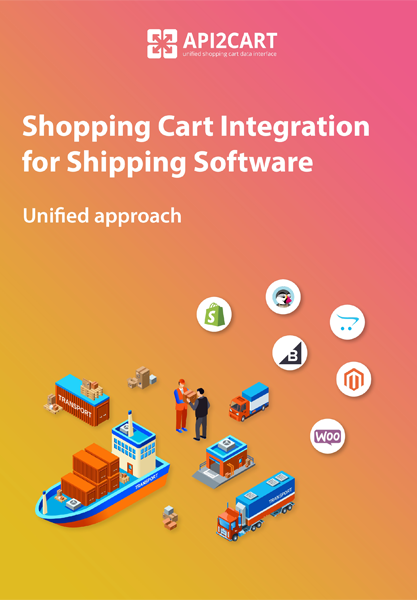
Shipping Software API Integration
Explore how to develop the integration between your shipping software and eCommerce platforms easily.
How can API2Cart help shipping software to implement shopping cart integration?
Supporting multiple shopping sites requires ongoing engineering, testing, monitoring, and version maintenance. API2Cart centralizes much of that platform-specific integration work, but software vendors still need to implement and operate their own business logic.
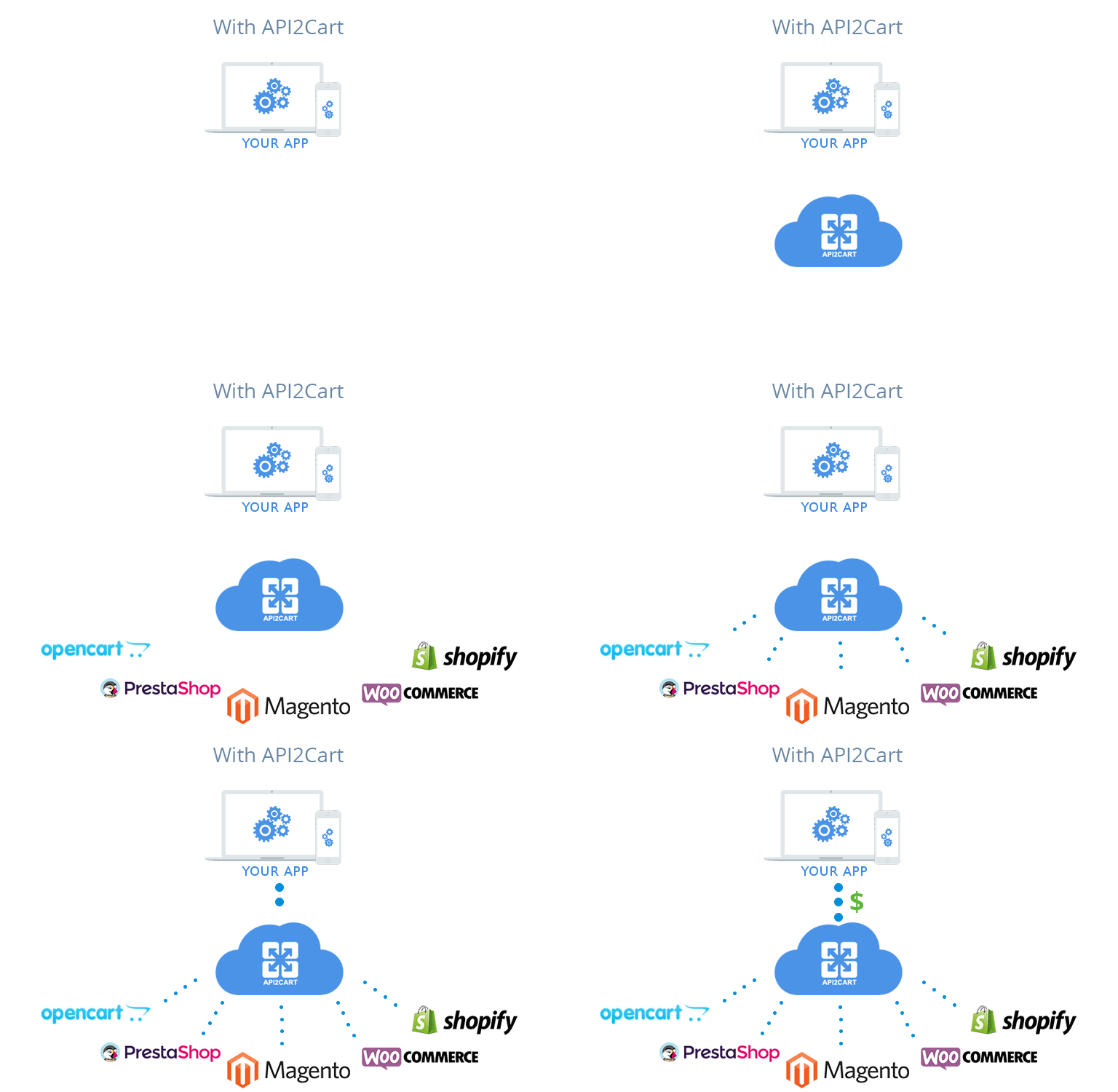
API2Cart offers one integration point for 80+ supported shopping carts and marketplaces. Its API methods cover products, orders, shipments, customers, inventory, and other store data, with support varying by platform and method parameter.
A unified API can reduce separate connector development and ongoing platform-version work. Review API2Cart's current pricing and request a 14-day trial to test the required shipping workflows.